
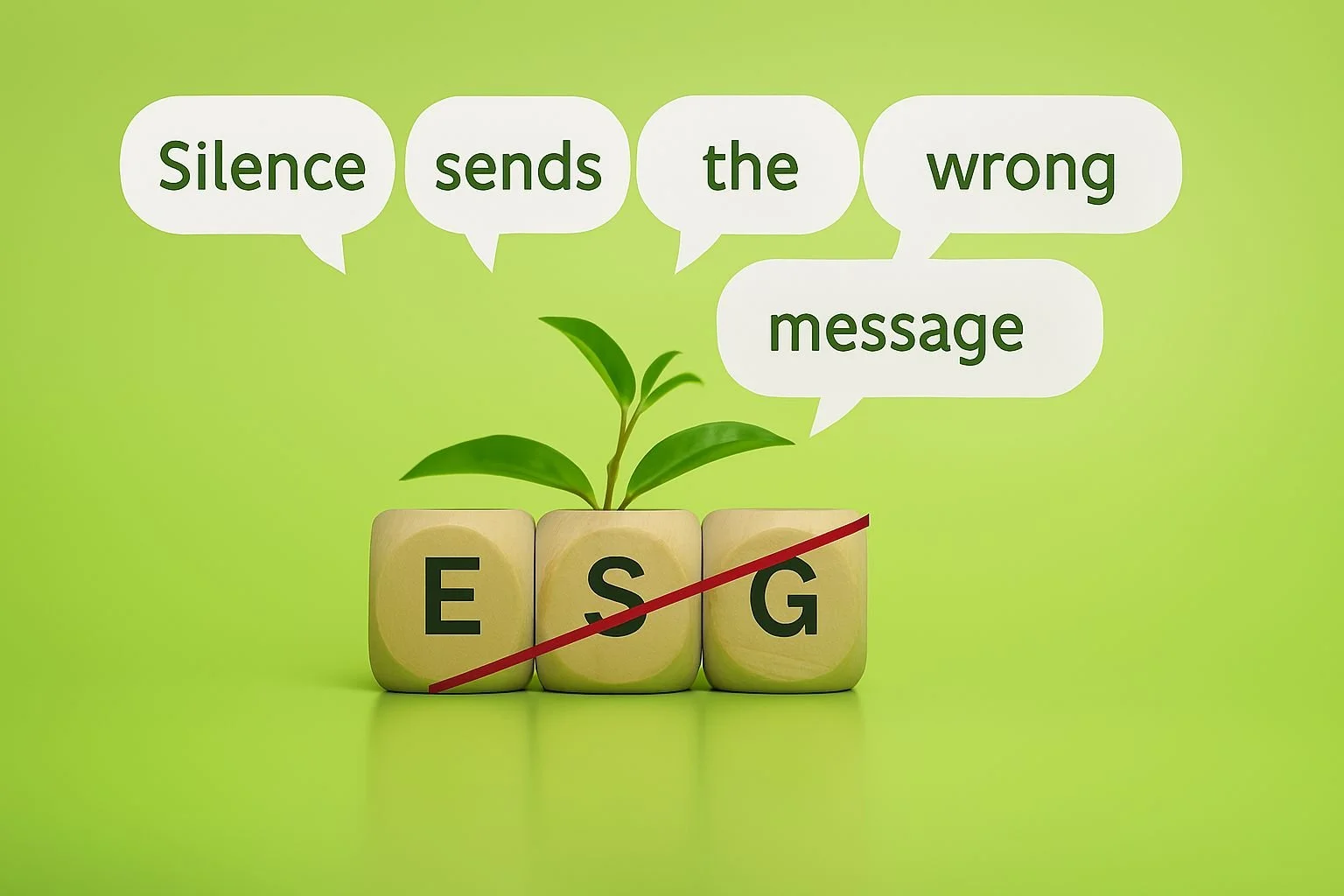
When saying nothing sends the wrong message
Over the weekend, I yet again read a report that greenhushing (the deliberate under-communication of environmental and social progress) in business is on the rise. As a comms professional who operates in the sustainability arena, this is a worrying trend.
Sustainability communications in 2025 have become a high-stakes affair. Messages that once felt straightforward, e.g. improved sourcing, ethical operations, transparent supply chains or lowered emissions, are now often met with cynicism or accusations of greenwashing. Political polarisation has made wider ESG reporting a minefield. Businesses, wary of backlash or being branded performative and disingenuous, opt for minimal visibility around their sustainability initiatives.
Silence might feel safe. But it isn’t. It can damage a brand, hinder outcomes and erode stakeholder trust. It’s rarely the answer.
When you don’t communicate, you’re not in control of the conversation or the message — it’s that simple. You leave your stakeholders to make their own assumptions about your values, progress and intent. This is risky at best and erodes trust at worst.
The irony is that many organisations greenhushing today are actually doing meaningful work. But in their reluctance to speak up, they risk losing credibility, momentum and relevance.
As in any other scenario, you need a comms strategy that doesn’t overpromise but doesn’t underdeliver either. Key cornerstones are:
1. Transparency and honesty
Transparency is the bedrock of credible sustainability communication. That means sharing the good, the bad and the ugly. Be upfront about challenges, gaps, setbacks and areas for improvement.
2. Start where you are
State your baseline clearly and without spin. Progress over perfection. Most people accept that sustainability is a marathon, not a sprint.
3. Share evidence, not just ambition
People are weary of vague platitudes. Back up your claims with data (make sure it’s accurate and verifiable). Include what didn’t work, and what you’re doing differently next.
4. Keep talking
A one-off announcement isn’t a strategy. Build a regular cascade of updates that demonstrate momentum, however incremental.
5. Tell real stories
Use your comms to spotlight the people, partnerships and decisions driving change. This isn’t just a reporting exercise, it’s an opportunity to show leadership.
As I said in my last post: use your data but humanise the story. Effective ESG narratives focus on the journey — the starting point, the hurdles and the road ahead.
We need to normalise sustainability as a work in progress. Because that’s exactly what it is.
Greenhushing won’t help us get there.
Sometimes, silence speaks louder than words.
*Freepik
